
We all dream of a magazine-worthy exterior, but between dream and reality there are often a few pitfalls. Do you find your outdoor space untidy, difficult to maintain or simply lacking in charm? Rest assured, most exterior design flaws can be rectified.
At Plantations Weisen, we intervene on a daily basis to help homeowners turn these "failures" into assets. The aim is not to raze everything to the ground, but to understand what's going wrong, so as to improve the garden in the long term. Here's our analysis of the 7 most common mistakes and our tips for correcting them.
Planting mistakes: choosing and managing plants
Once the structure is in place, it's the choice of plants that sets the mood. This is often where the impatience of the gardener plays tricks.
1. Too much mineral and "all concrete
-
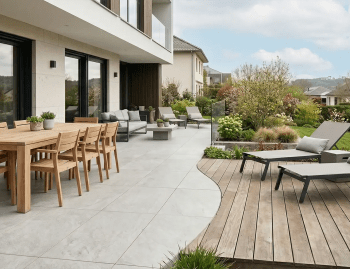
The symptom: You've wanted to limit maintenance by paving over a huge area, or you've bought your house and it's surrounded by concrete. The result: it's cold and dazzling in summer, water doesn't run off properly and heat builds up.
-
The solution: Reintroduce plants in small patches.
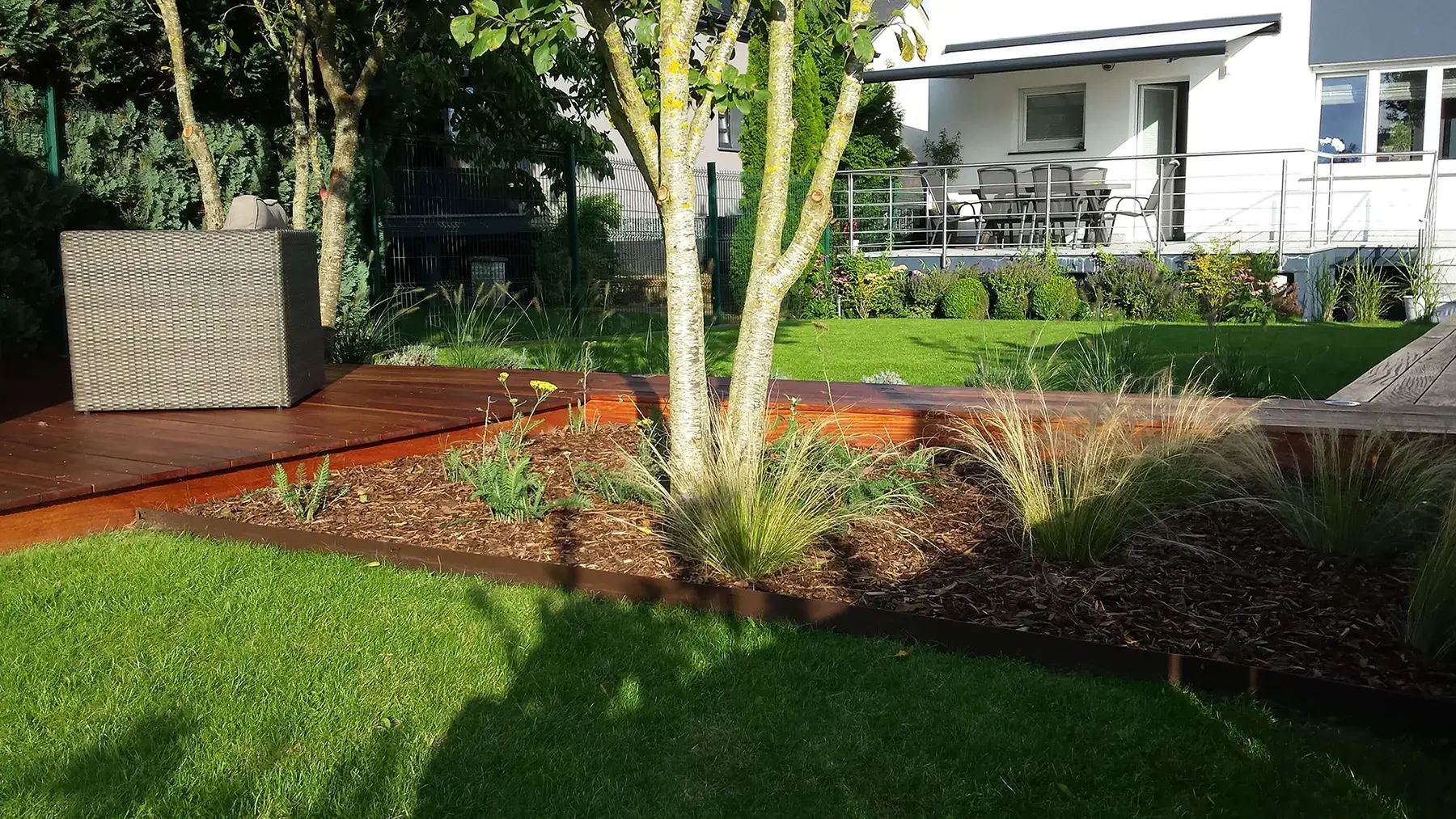
 Pro tip: If you can't break up the terrace, install XXL pots or create "reservations" in the ground to plant graphic plants. The ideal balance for harmonious landscaping is often 1/3 mineral and 2/3 plant.

2. The "flat" garden and lack of structure
-
The symptom: Your plot is flat and you've planted everything on the periphery. The gaze crosses the garden all at once, without stopping. The result is a feeling of emptiness, lacking privacy and charm.
-
The solution: Create planes and volume.
Pro tip: Don't just plant against fences! Create clumps in the center or offset to block the view and create "green rooms". Play with height by integrating a stem tree to create relief.
3. Poorly thought-out lighting and terrace
-
The symptom: The terrace is unusable at midday (south-facing with no shade) or the garden becomes a black hole from 9pm?
-
The solution: Anticipate usage.
Pro tip: When it comes to lighting, think "ambience" rather than "soccer stadium". Mark out pathways with quality solar spotlights, for example. For the terrace, add a shade sail or deciduous trees to regulate the temperature naturally.
4. The monospecific hedge (the green wall)
-
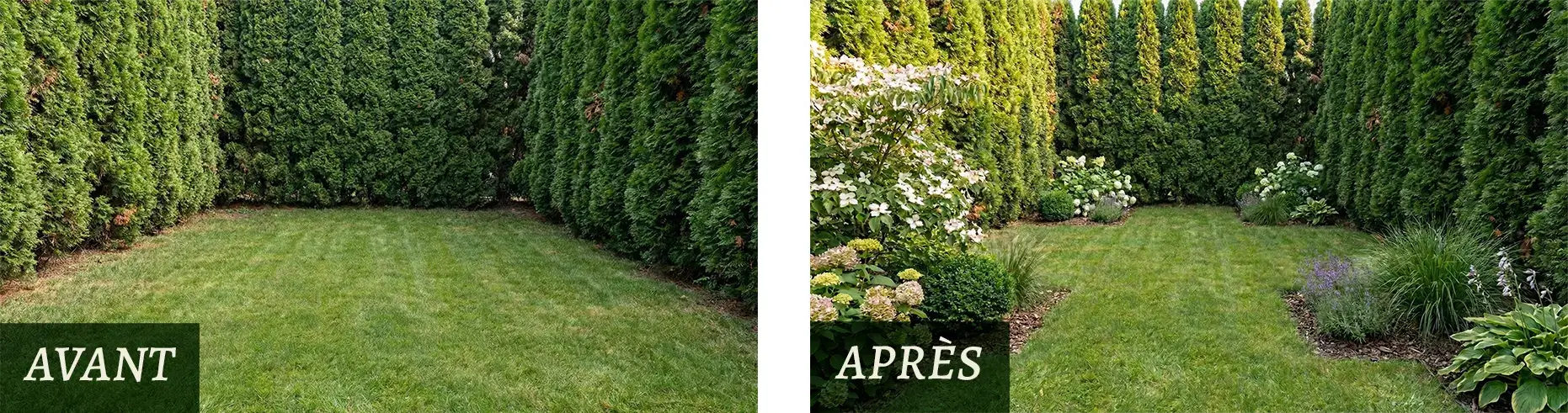
The symptom: A hedge composed entirely of cedar or laurel. It's monotonous, encourages disease and provides no biodiversity.
-
The solution: opt for a varied hedge.
Pro tip: To improve your garden, replace a few shrubs with flowering or fruiting species. A living hedge changes appearance with the seasons and attracts birds, making the space much more lively.
Structural errors: when design fails
A successful garden depends above all on a good framework. If the basics (soil, living areas, volumes) are neglected, even the most beautiful flowers won't be enough.
5. Planting too close together
-
The symptom: To get a "finished" effect right away, you planted the shrubs 30 cm apart. Two years later, they're choking, disease is proliferating and you have to prune constantly.
-
The solution: Respect planting distances.
Pro tip: Find out the plant's mature size. It's better to leave the soil bare (mulched) for the first few years than to have to uproot plants later on. Patience is the key to a sustainable green space, whether you're a budding gardener or a professional 😉

6. Fruit salad": too many different varieties
-
The symptom: You've bought a plant of each variety from the nursery. The visual result is messy, tiring for the eye and lacking in unity.
-
The solution: The rule of repetition.
Pro tip: Limit your plant palette. Choose 5 or 6 key plants and repeat them in groups (always an odd number: 3, 5 or 7) in different parts of the garden. This creates a soothing common thread.
7. Don't anticipate maintenance
-
The symptom: You've chosen fragile exotic plants or ultra-fast-growing trees without having the time to look after them. The garden becomes a jungle or a plant graveyard.
-
The solution: The right choice in the right place.
Pro tip: Be honest about how much time you can devote to gardening. Choose local, hardy, ground-covering perennials to limit weeding. A beautiful garden is one where maintenance is controlled. And if you find you're running out of time, you can always call on our landscape gardening teams.
Conclusion
In short, a beautiful exterior can't be improvised, it has to be thought through. If you recognize yourself in many of these points, don't panic: it's always possible to make adjustments to improve your garden. Sometimes, moving a few shrubs or redesigning a pathway is enough to change everything.
Would you like a precise diagnosis of your plot? The Plantations Weisen team is at your disposal to transform these constraints into a true haven of peace.


🗒️ Key facts
-
Structure the space: Avoid the flat, empty garden by creating volumes and distinct zones.
-
Mix materials: Don't pour concrete on everything, let the soil breathe to avoid overheating.
-
Think long-term: Plant at the right distance, anticipating the plants' adult size.
-
Simplify the palette: fewer varieties, but repeated in groups for greater harmony.
-
Make life easier for yourself: Choose plants that are suited to your soil and your availability for maintenance.